Because Every Intelligent System Needs a Smarter Framework of Trust.
AI Kit LB helps organizations assess and strengthen AI governance maturity using a structured Responsible AI Framework. We provide practical guidance, diagnostics, and recommendations to support ethical, transparent, and accountable AI—empowering leadership teams to govern AI with confidence.
AI audit is a structured, risk-based assessment of AI systems across their full lifecycle, combining technical review with governance and control evaluation. It examines how AI models are developed, deployed, monitored, and governed focusing on whether they operate in line with ethical principles, risk appetite, and organizational policies.
At AI Kit LB, AI audit covers both technical and non-technical dimensions, including:
Data inputs and data quality controls (sources, bias, integrity, lineage)
Model design and logic (assumptions, limitations, explainability)
Deployment and operating controls (human oversight, change management, access controls)
Performance and monitoring mechanisms (accuracy, drift, incident handling)
Governance structures (roles, accountability, escalation, documentation)
Rather than acting as a statutory external auditor, AI Kit LB provides advisory-led AI audit services that help organizations identify gaps, assess maturity, and strengthen controls. The outcome is a clear, actionable view of AI risk, control effectiveness, and governance readiness—enabling leadership teams to use AI responsibly, transparently, and with confidence.
AI Kit LB’s AI audit approach is led by Cynthia Merhej who is among the early professionals in the Middle East to obtain the Advanced AI Auditor certification from ISACA. This certification reflects deep expertise in AI risk, controls, governance, and auditability, and reinforces AI Kit LB’s ability to assess AI systems with both technical rigor and assurance discipline. Cynthia’s background in audit and AI ensures that AI audits are conducted with the same level of professional skepticism, structure, and accountability expected in established assurance functions.
We review:
How data is collected, used and stored
Transparency, fairness and explainability
Decision accountability and bias prevention
Internal policies and documentation alignment
Measurable effects on employees, clients and users
AIKIT LB helps organizations assess, monitor and strengthen the integrity of their AI and digital systems.
Our auditing approach blends technology, governance and human insight ensuring that innovation stays transparent, fair and accountable.
1
We understand your AI systems, goals and risk exposure through interviews and data mapping.
2
We analyze governance policies, workflows and datasets to detect ethical or compliance blind spots.
We apply AIKIT LB Responsible AI Framework built around fairness, transparency, privacy and accountability to measure system maturity.
Each AI Audit includes:
AIKit LB applies its Responsible AI Framework to help organizations evaluate governance maturity, not to issue audit opinions or regulatory assessments.
The framework is built around four core pillars:
How systems account for equity, bias, and inclusive outcomes.
How AI-driven decisions are documented, explained, and communicated.
How data is handled, protected, and limited to appropriate use.
How roles, responsibilities, oversight, and escalation are defined.
Together, these pillars provide a structured way to understand strengths, gaps, and areas for improvement.
Our framework-based approach supports organizations that want clarity and structure around AI use.
Through guided evaluation and discussion, organizations can:
Understand current governance maturity
Identify ethical, operational, and organizational risks
Strengthen internal oversight mechanisms
Align system use with institutional values
Prepare for future scrutiny from stakeholders or regulators
This work is advisory and enablement-focused, supporting internal ownership rather than external assurance.
We begin by understanding where and how intelligent systems are used within the organization.
Relevant policies, workflows, and governance practices are reviewed through a Responsible AI lens.
The Responsible AI framework is applied to evaluate maturity across key responsibility dimensions.
Clear insights and prioritized recommendations are provided to support governance improvement.
Optional workshops, advisory sessions, and governance design support help teams act on insights.
In addition to framework application, AIKit LB supports organizations with:
Responsible technology policies
Oversight and escalation structures
Decision accountability models
Internal awareness and training sessions
Long-term governance capability building
Organizations adopting intelligent systems
Leadership teams seeking governance clarity
Product, innovation, and data teams
Educational and research institutions
Public-interest and mission-driven organizations
Teams preparing for long-term responsible technology use
A structured view of governance maturity
Clear, non-technical explanations for leadership
Practical guidance without regulatory overreach
Alignment with global Responsible AI principles
Support that respects organizational autonomy
If your organization is exploring or expanding the use of intelligent systems and wants a stronger governance foundation, AIKit LB can help you apply a structured Responsible AI framework to support informed and responsible decision-making.
Get in touch to start the conversation.
The purpose of an AI audit is to help organizations understand, govern, and control how AI is used across the enterprise. It provides clarity on risks, controls, accountability, and alignment with ethical and business expectations before issues become regulatory, reputational, or operational problems.
No. AI audit is not a statutory financial audit. At AI Kit LB, AI audit is an advisory and governance assessment designed to strengthen internal capability, oversight, and control—not to issue an external assurance opinion.
We assess AI across both technical and governance dimensions, including data quality and bias risks, model logic and limitations, deployment controls, monitoring mechanisms (e.g. drift), human oversight, documentation, and organizational accountability structures.
Both but in context. We do not “judge” models in isolation. We assess how AI models are designed, implemented, governed, and used within the organization, because risk usually arises from how AI is applied, not just from the algorithm.
Yes especially in that case. AI audit helps organizations assess vendor AI risk, including transparency, data handling, accountability, and contractual governance, even when the AI is not developed in-house.
AI audit equips executives and boards with visibility and control. It helps leadership understand where AI is used, what risks exist, who is accountable, and whether governance is sufficient enabling informed oversight and confident decision-making.
No. AI audit is valuable at any stage of AI maturity from early experimentation to scaled deployment. In fact, early AI audits often prevent costly rework, compliance gaps, and uncontrolled AI use later on.
Ethics are embedded in AI audit through assessments of fairness, transparency, explainability, human oversight, and accountability. AI audit translates ethical principles into practical governance and controls, rather than abstract statements.
An AI audit delivers clear findings, maturity insights, and actionable recommendations. Organizations gain a structured view of gaps, risks, and priorities—supporting governance improvement, policy design, and safer AI adoption.
AI audit is most effective when it involves cross-functional stakeholders, including executives, risk and compliance teams, internal audit, IT, data teams, HR, and business owners. AI Kit LB facilitates this collaboration to ensure ownership and alignment.
Have a question, idea, or collaboration in mind?
Our team is always ready to connect, support, and create new possibilities with you.
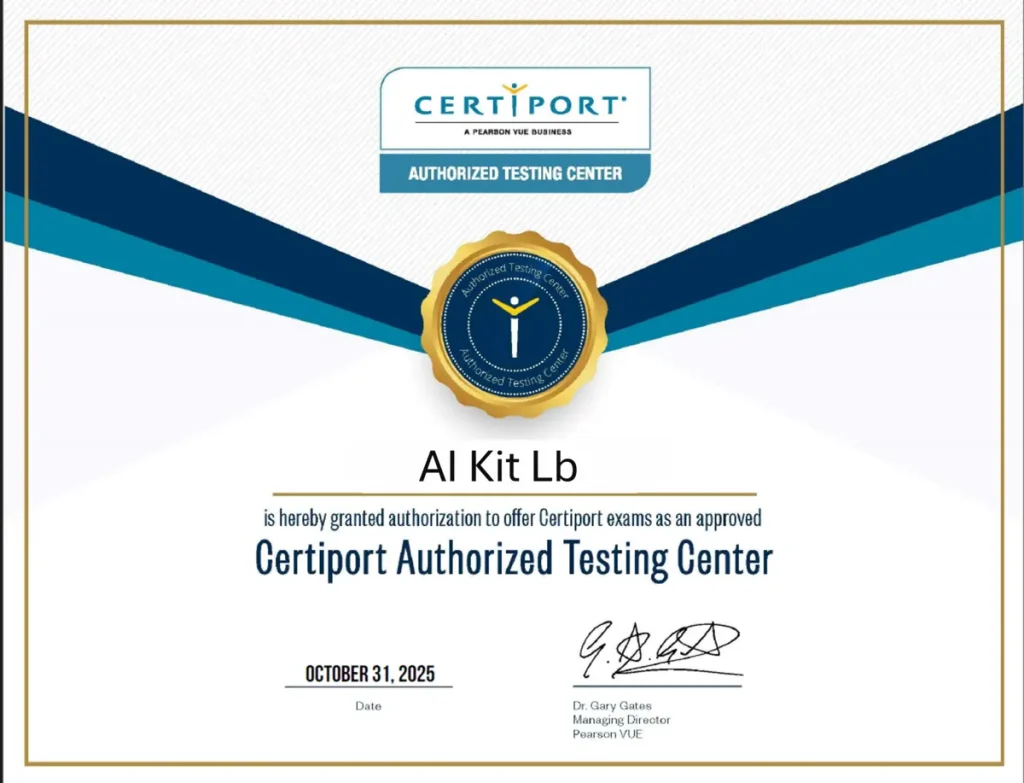
Tell us who you are and which course you want — we’ll send you the details and payment options right away.
Practical AI upskilling built for finance, audit & governance professionals in the MENA region
Build AI audit frameworks, assess AI risks, and advise your board on governance — before regulators require it.
Understand AI controls, spot risks in client environments, and stay ahead of AI-related assurance requirements.
Go beyond traditional IT audit. Master AI-specific controls, data governance, and generative AI risk assessment.
Automate financial analysis, draft reports faster, and streamline workflows — reclaim 5+ hours every week.
Get a clear AI governance roadmap. Deploy AI responsibly, manage risk, and lead your team through the transition.
Bank transfer · Credit card · Cash
Also accepted via
📱 Whish App
WhatsApp to confirm enrollment:
+961 3 110 716Not sure which program fits your organisation? Chat with Cynthia →